The Reason
A cura di Mandeep Singh. An estimated 20 or more students died by committing suicide, and the question arises: why?
The answer is simple, the insatiable corruption in India.
The ongoing protest all over India was started after allegations of NEET exam leakage, which resulted in the cancellation of the exams. (The NEET (National Eligibility-cum-Entrance Test) is India's national entrance examination for students who want to study undergraduate medical and related healthcare courses. It serves as the common entrance exam for admission to many colleges across India.)
Millions of students prepared for and took part in the exam, and when it was cancelled, some of them did not have anything else to do but commit suicide because students invest their time and money in the preparation for these types of exams, which can help them build a better future. Most of these students are from modest backgrounds, and just to prepare for these exams, they have to pay tuition fees, which are covered by their families, who are already on the edge of poverty. The students themselves cannot work to sustain themselves because they have to study 10–15 hours a day just to pass the exam. In most of the cases there is only one bread winner in the family who has to sustain all the expenses of the whole family and with the low income in India it is very difficult even for a middle class person to sustain his family and invest in the study of his children. But the students are not only from the middle class families but from the lower class as well and for them preparing for the exam and to succeed in life is the only dream and solution they can think to change the hereditary poverty of their family. They study with only one goal in mind which is not giving up to poverty and breaking from the chain of poverty and make their parents proud by earning a good job and hence changing the future of their struggling family. And irregularities in the exams in many states break not only the dreams of the students but of their families as well.
The Protest
The protest started in late May after the cancellation of the NEET exams, which resulted in millions of students losing one important year of their lives after working so hard for it. The protest took a major turn when the famous activist Sonam Wangchuk, who has been honoured with many awards for his contribution to the country, joined the protest with Cockrage Janta Party in support of students demanding the resignation of Education Minister “Dharmendra Pradhan” to accept accountability and incompetency in holding the position of Education Minister. The protest started at Jantar Mantar, a place famous for holding major peaceful protests. Sonam Wangchuk started his hunger strike on 23 June and eventually ended it after the resignation of the Education Minister on 23 July. Whenever someone raises their voices against corruption or the government they are called antinationals or terrorists and even in these protests the students who are the future of India and were standing for their rights legally were called terrorists and antinationals by some government officials and main media.
The Violence
On 17th July, dozens of police personnel disguised in civilian dress entered the place where Sonam Wangchuk was and forcibly took him away. Students could do little at that time, as they were stopped by the police. He was taken to the hospital to end his hunger strike, which he continued even in the hospital.
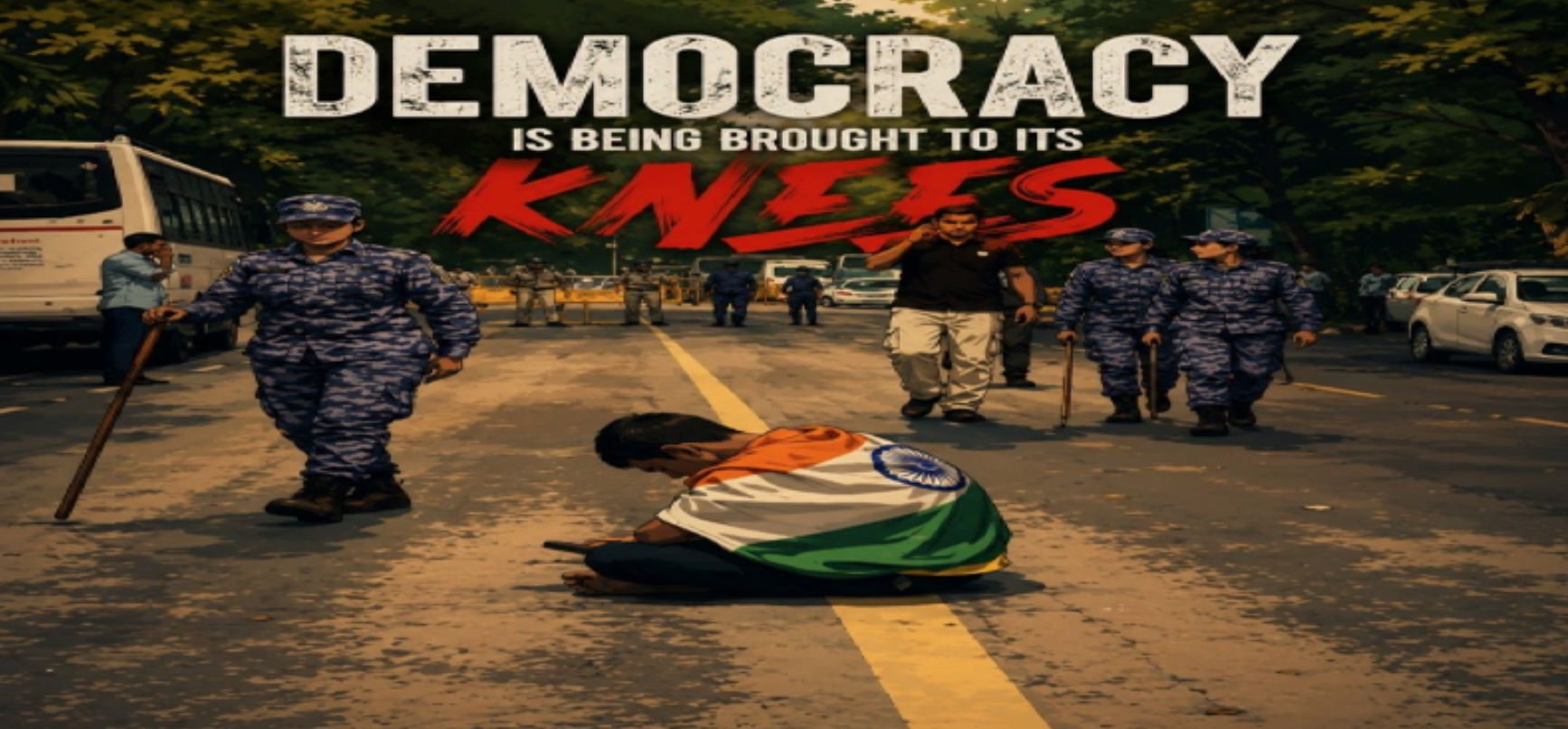
On 20 July, the students had already planned a peaceful march from Jantar Mantar to the Parliament of India. Thousands of students from all over India came to join the peaceful protest, but they were stopped at the barricades put up by the Delhi Police. These barricades were welded together so it would be harder for anyone to move them, and some students also reported that they felt electric shocks when they touched them. Later, the protests turned violent and became a nightmare for many students to remember for the rest of their lives, as the police force used violence against the protesters. Thousands of students were beaten with sticks with nails on them, which the police are denying, but there are many videos on social media by students present at the protest showing the proof. Most of the police personnel took off their name tags before entering the protest so they could not be recognized and held accountable for their brutal actions against the students. Many police officers without police uniforms were also detected and were seen beating women with sticks. Later, many students were forcefully and illegally detained by the police for protesting, and when their families and advocates tried to contact them, they were not allowed to do so. What furthermore broke the trust of the youth of India is that the police used violence against the peaceful protesters and used batons and tear gas on them. With many videos online, evidently many women were also targeted in the protest by the police, and a few were molested and assaulted as well and were called prostitutes only because they stood up for their rights. In one case, a child of 12 years was slapped just because he was present there. AI-powered, real-time, 360-degree facial recognition cameras mounted on police vehicles were seen circulating at protest sites, capturing photos of the protesters and registering their identities. Later, many students were booked under false cases just for protesting. Many videos from the students suggested that the government wanted the protest to become violent, as a truck full of stones was parked at night close to the protest site, and a few broken vehicles were also put there to blame the students later. While students were getting beaten by the forces, many goons were roaming around freely, beating students, instigating violence, and making the protest look bad. In one video, a policeman is seen putting fear into students by telling them that he would put drugs in their possession just to frame them for protesting. All these incidents showed the level of corruption in the system.
The victory after defeat
20 July was the day when the youth totally lost their trust in the government because of the unprovoked violence against them. Despite the brutality of the police and other forces, students remained unified, and looking at the murderous intent of the forces, more nationals came to take part in the protest. This time, it was not only students but people from all other age groups as well, and their voices became stronger than before.
Help poured in from all over India. Those who could come came and joined the protest, which became a national protest. People sent food through online deliveries, which helped a lot in the protest, but later on, some videos were captured showing policemen stopping these deliveries and snatching the food away before it could be taken to the hungry students who were protesting. In one viral video, one politician was clearly seen stopping the students who were going to join the protest, hitting them, and blaming them for being anti-national.
In the following days, after the much-condemned actions of the state police, the Advocates of the Supreme Court entered and took part in the ongoing protest, trying to help the illegally detained students and taking the situation to the court.
Finally, the government gave in to the pressure of the students and the whole nation and accepted their demands, and the Education Minister resigned, and Sonam Wangchuk broke his fast.
Even after the resignation of the Education Minister, the protest, which at this point was taking place in all the major states of India, was still alive in many other cities. In Bihar, on 25 July, one policeman opened fire with his AK-47 on the students and injured three students. The policeman was later suspended.
In the end, the Prime Minister, who had been silent about the ongoing protests, posted a video online condemning the exam paper leaks and promised to punish the culprits.
Apart from this protest, many other protests are going on in India, and the people are waiting for better judgment. But this protest, in particular, has shown the world that the youth are not to be taken as fools or as weak, and they can raise their voices for their rights, fight for them, and win! But we are waiting to see what judgement will be taken against the officers involved in the brutality against the students.
After the resignation the ex Education minister the first day when presented in the Parliament he was welcomed by his party members with garlands and cheers as he was some hero. these actions shows the mentality of these politicians and their accountability and proves that they feel protected even after these events and shows no remorse.
Whether all that has happened was for the worst or the best is yet to be seen!